
North Carolina State University Athletics
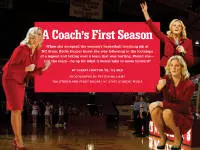
A Coach's First Season: Feature Story Part one
4/7/2010 12:00:00 AM | Women's Basketball
The Red & White for Life blog is the official blog of the NC State Alumni Association.
When she accepted the women’s basketball coaching job at NC State, Kellie Harper knew she was following in the footsteps of a legend and taking over a team that was hurting. Would she—and the team—be up for what it would take to move forward?
by cherry crayton ’01, ’03 med
At about 9:10 p.m., on Friday, Oct. 19, 2009, Kellie Harper jogs onto Kay Yow Court in Reynolds Coliseum. Nearly 5,000 NC State fans are there to watch as the Wolfpack men’s and women’s basketball teams open the 2009–10 season with a public practice, the Red Rally. Wearing black warm-up pants and a red NC State T-shirt, with her long, blonde hair pulled into a ponytail, Harper grabs a microphone and does a 180-degree turn as she waves to the crowd and takes in a standing ovation. With an excited but steady voice, the 32-year-old women’s basketball coach says, “I promise you that you will be proud of the team we put on the court. They will play hard, they will play up-tempo, and they will play with a lot of energy. You will not want to miss it.”
Afterward, Harper reflects on the first practice, saying she didn’t have to say much to get the players excited. They were ready.
For some of the players, the 2008–09 season had been the longest of their lives. They had come to NC State to play for Kay Yow. She was a women’s basketball pioneer who had joined the Wolfpack in 1975, a coaching legend who had led the 1988 U.S. women’s basketball team to Olympic gold and a maternal figure who had taught them about perseverance and resilience. “We have little or no control over circumstances in life,” she often told them, “but we have 100 percent control over how we will respond.”
When they chose to come to NC State, the players knew of Yow’s history with breast cancer. She was first diagnosed with it in 1987; it came back during the 2004–05 season and again in 2006–07. Then came 2008–09. Calling it one of the hardest decisions of her life and citing the progression of her cancer, Yow announced on Jan. 6, 2009, that she would not return to the sideline that season. Eighteen days later, she died.
Every game from then on seemed like a memorial service. NC State players wore their pink jerseys with “Yow” on the back in her memory. The ACC teams they faced over the next month honored her, too, with moments of silence or with pink shoelaces, warm-ups and ribbons. The Pack played with a heavy heart.
The season ended March 3 when NC State lost in the first round of the ACC Tournament, finishing 13–17. It was only the fifth losing season in the program’s 35-year history. Five weeks later they learned that interim coach and Yow’s hand-picked successor, Stephanie Glance, would not be named their permanent coach.
Through it all, players felt like the world was watching them. “Poor NC State,” they’d heard others say. “First they lost their coach, and now they have to deal with a new coaching staff.”
People were supportive, offering condolences and words of encouragement. The players appreciated it, but they didn’t want anybody feeling sorry for them. “It’s life,” says senior Sharnise Beal. “You’re going to have hurdles. We want people to see that we’re jumping over them.”
At about 7:45 p.m., 30 minutes or so before NC State’s first regular-season game on Nov. 13, Harper stands in the team’s locker room and writes on a whiteboard as the players stretch in a training room next door. Using a red marker, she lists the points of emphasis for offense and defense. At the top of the whiteboard, she writes: “HAVE FUN.”
The players enter the locker room and take their seats. Harper addresses them. “This is what we’ve been waiting for, right?” She points to and expands on what she’s written. She goes over the defensive assignments for the five starters.
“OK. Any questions?” Harper asks. None.
“Right here,” Harper says, motioning the players to stand and circle around her. They do, and as they take each other’s hands, Harper says, “Let’s have fun, y’all. Have fun.”
She leads them in a prayer. As the players break their hold, one of them says, “First game. I’m so excited!”
“Hey,” Harper says, “we don’t get many of these, right? Make it count. Make it count. All right?”
They do, defeating Florida International 87–71. After the game, as Harper walks into the locker room, the players applaud her.
Like the NC State players, Harper knew what it was like to be in a spotlight. She had gone to the University of Tennessee, where playing in front of sold-out crowds was routine. And she had played for Pat Summitt, who has won more than 1,025 games—the most of any college basketball coach—and eight NCAA titles. “You could say,” sports journalist Mechelle Voepel wrote for ESPN.com about Harper, “. . . no coach on the women’s side of hoops has ever had two such iconic figures hovering over her career.”
Before accepting the head coaching job at NC State, Harper talked with Summitt about the opportunity. Harper felt like NC State was a good fit, but she needed reassurance. Summitt had no doubts. “Absolutely none,” says Summitt, who was a friend of Yow’s. “I have no doubt that she will do great things [at NC State]. . . . Not everybody has ‘it,’ but she has ‘it.’”
Summitt points to Harper’s playing career at Tennessee. Her freshman year, Harper was a back-up point guard and shared the team’s Sixth Player of the Year award as the Lady Vols won the 1996 NCAA title. Her sophomore year, when she was expected to be the starting point guard, her team entered the season ranked No. 4 in the nation. But during a pre-season pickup game, Harper tore the anterior cruciate ligament in her right knee. She spent six hours a day rehabbing it. Though she missed the first 16 games of the 1996–97 season, she was back to playing within two and a half months. “She came back from an injury quicker than anybody else has ever done in our program,” Summitt says. “It was amazing. Unheard of.”
Then, during a second-round game of the NCAA Tournament, she tore ligaments in her ankle. It should have ended her season, but she slept in a locker room for two nights so a trainer could provide continuous treatment. In the regional final, she scored 19 points as the Lady Vols advanced to the Final Four. In the title game, she had a career-high 11 assists, setting a tournament record, and Tennessee claimed its second straight title. The following season she scored a career-high 20 points in the 1999 national championship game to help lead the Lady Vols to their third straight title and a 39–0 record. “I knew then that she [was] going to be a great coach,” Summitt says. “She was incredibly focused and extremely competitive.”
That was something that Harper’s parents—Kenneth and Peggy Jolly—noticed early. For example, the family once went to Florida for a family vacation, and Kellie begged her father to buy her a basketball and drive around until they found an outdoor court she could play on. She spent her time on the beach doing conditioning drills. She was 12.
Her parents introduced her to the game. They had both played the sport at Tennessee Tech, and the day they took her home from the hospital after her birth, they took a photo of her with a basketball. She spent countless hours watching games and talking X’s and O’s with her father, a coach and a high school assistant principal. When she wasn’t helping out on the family’s tobacco farm in Sparta, Tenn., she was playing full-court, one-on-one games against her brother, Brent, who is three years younger, or heading out to a gym, spending entire weekends playing pickup game after pickup game against guys. When she was a sophomore at White County High School, she decided to be a coach. “I couldn’t imagine my life without [basketball],” she says.
And now, after five years at the helm of Western Carolina, where she compiled a 97–65 record and led her teams to two Southern Conference tournament titles and two NCAA Tournaments, Harper had come to NC State. She had other opportunities to leave Western, but her dream is to coach a team to a Final Four. “I wouldn’t have taken this job if I didn’t feel like I could do that here,” she says.
So on the afternoon of April 16, 2009, about 30 minutes before a press conference to announce her hire, Harper walked into the Wolfpack women’s basketball team’s locker room. The players were waiting to meet her. The first words out of her mouth? “I love to win.”
As soon as Harper said that, senior guard Nikitta Gartrell says, “a whole lot of weight [lifted] off our shoulders.” No more worries about Yow’s illness. No more anxiety about who would be the next coach. “When Coach Kellie said winning, that’s all that we needed,” Gartrell says. “That’s what we wanted, too.”
Look for part two of this story Thursday at GoPack.com
When she accepted the women’s basketball coaching job at NC State, Kellie Harper knew she was following in the footsteps of a legend and taking over a team that was hurting. Would she—and the team—be up for what it would take to move forward?
by cherry crayton ’01, ’03 med
At about 9:10 p.m., on Friday, Oct. 19, 2009, Kellie Harper jogs onto Kay Yow Court in Reynolds Coliseum. Nearly 5,000 NC State fans are there to watch as the Wolfpack men’s and women’s basketball teams open the 2009–10 season with a public practice, the Red Rally. Wearing black warm-up pants and a red NC State T-shirt, with her long, blonde hair pulled into a ponytail, Harper grabs a microphone and does a 180-degree turn as she waves to the crowd and takes in a standing ovation. With an excited but steady voice, the 32-year-old women’s basketball coach says, “I promise you that you will be proud of the team we put on the court. They will play hard, they will play up-tempo, and they will play with a lot of energy. You will not want to miss it.”
Afterward, Harper reflects on the first practice, saying she didn’t have to say much to get the players excited. They were ready.
For some of the players, the 2008–09 season had been the longest of their lives. They had come to NC State to play for Kay Yow. She was a women’s basketball pioneer who had joined the Wolfpack in 1975, a coaching legend who had led the 1988 U.S. women’s basketball team to Olympic gold and a maternal figure who had taught them about perseverance and resilience. “We have little or no control over circumstances in life,” she often told them, “but we have 100 percent control over how we will respond.”
When they chose to come to NC State, the players knew of Yow’s history with breast cancer. She was first diagnosed with it in 1987; it came back during the 2004–05 season and again in 2006–07. Then came 2008–09. Calling it one of the hardest decisions of her life and citing the progression of her cancer, Yow announced on Jan. 6, 2009, that she would not return to the sideline that season. Eighteen days later, she died.
Every game from then on seemed like a memorial service. NC State players wore their pink jerseys with “Yow” on the back in her memory. The ACC teams they faced over the next month honored her, too, with moments of silence or with pink shoelaces, warm-ups and ribbons. The Pack played with a heavy heart.
The season ended March 3 when NC State lost in the first round of the ACC Tournament, finishing 13–17. It was only the fifth losing season in the program’s 35-year history. Five weeks later they learned that interim coach and Yow’s hand-picked successor, Stephanie Glance, would not be named their permanent coach.
Through it all, players felt like the world was watching them. “Poor NC State,” they’d heard others say. “First they lost their coach, and now they have to deal with a new coaching staff.”
People were supportive, offering condolences and words of encouragement. The players appreciated it, but they didn’t want anybody feeling sorry for them. “It’s life,” says senior Sharnise Beal. “You’re going to have hurdles. We want people to see that we’re jumping over them.”
At about 7:45 p.m., 30 minutes or so before NC State’s first regular-season game on Nov. 13, Harper stands in the team’s locker room and writes on a whiteboard as the players stretch in a training room next door. Using a red marker, she lists the points of emphasis for offense and defense. At the top of the whiteboard, she writes: “HAVE FUN.”
The players enter the locker room and take their seats. Harper addresses them. “This is what we’ve been waiting for, right?” She points to and expands on what she’s written. She goes over the defensive assignments for the five starters.
“OK. Any questions?” Harper asks. None.
“Right here,” Harper says, motioning the players to stand and circle around her. They do, and as they take each other’s hands, Harper says, “Let’s have fun, y’all. Have fun.”
She leads them in a prayer. As the players break their hold, one of them says, “First game. I’m so excited!”
“Hey,” Harper says, “we don’t get many of these, right? Make it count. Make it count. All right?”
They do, defeating Florida International 87–71. After the game, as Harper walks into the locker room, the players applaud her.
Like the NC State players, Harper knew what it was like to be in a spotlight. She had gone to the University of Tennessee, where playing in front of sold-out crowds was routine. And she had played for Pat Summitt, who has won more than 1,025 games—the most of any college basketball coach—and eight NCAA titles. “You could say,” sports journalist Mechelle Voepel wrote for ESPN.com about Harper, “. . . no coach on the women’s side of hoops has ever had two such iconic figures hovering over her career.”
Before accepting the head coaching job at NC State, Harper talked with Summitt about the opportunity. Harper felt like NC State was a good fit, but she needed reassurance. Summitt had no doubts. “Absolutely none,” says Summitt, who was a friend of Yow’s. “I have no doubt that she will do great things [at NC State]. . . . Not everybody has ‘it,’ but she has ‘it.’”
Summitt points to Harper’s playing career at Tennessee. Her freshman year, Harper was a back-up point guard and shared the team’s Sixth Player of the Year award as the Lady Vols won the 1996 NCAA title. Her sophomore year, when she was expected to be the starting point guard, her team entered the season ranked No. 4 in the nation. But during a pre-season pickup game, Harper tore the anterior cruciate ligament in her right knee. She spent six hours a day rehabbing it. Though she missed the first 16 games of the 1996–97 season, she was back to playing within two and a half months. “She came back from an injury quicker than anybody else has ever done in our program,” Summitt says. “It was amazing. Unheard of.”
Then, during a second-round game of the NCAA Tournament, she tore ligaments in her ankle. It should have ended her season, but she slept in a locker room for two nights so a trainer could provide continuous treatment. In the regional final, she scored 19 points as the Lady Vols advanced to the Final Four. In the title game, she had a career-high 11 assists, setting a tournament record, and Tennessee claimed its second straight title. The following season she scored a career-high 20 points in the 1999 national championship game to help lead the Lady Vols to their third straight title and a 39–0 record. “I knew then that she [was] going to be a great coach,” Summitt says. “She was incredibly focused and extremely competitive.”
That was something that Harper’s parents—Kenneth and Peggy Jolly—noticed early. For example, the family once went to Florida for a family vacation, and Kellie begged her father to buy her a basketball and drive around until they found an outdoor court she could play on. She spent her time on the beach doing conditioning drills. She was 12.
Her parents introduced her to the game. They had both played the sport at Tennessee Tech, and the day they took her home from the hospital after her birth, they took a photo of her with a basketball. She spent countless hours watching games and talking X’s and O’s with her father, a coach and a high school assistant principal. When she wasn’t helping out on the family’s tobacco farm in Sparta, Tenn., she was playing full-court, one-on-one games against her brother, Brent, who is three years younger, or heading out to a gym, spending entire weekends playing pickup game after pickup game against guys. When she was a sophomore at White County High School, she decided to be a coach. “I couldn’t imagine my life without [basketball],” she says.
And now, after five years at the helm of Western Carolina, where she compiled a 97–65 record and led her teams to two Southern Conference tournament titles and two NCAA Tournaments, Harper had come to NC State. She had other opportunities to leave Western, but her dream is to coach a team to a Final Four. “I wouldn’t have taken this job if I didn’t feel like I could do that here,” she says.
So on the afternoon of April 16, 2009, about 30 minutes before a press conference to announce her hire, Harper walked into the Wolfpack women’s basketball team’s locker room. The players were waiting to meet her. The first words out of her mouth? “I love to win.”
As soon as Harper said that, senior guard Nikitta Gartrell says, “a whole lot of weight [lifted] off our shoulders.” No more worries about Yow’s illness. No more anxiety about who would be the next coach. “When Coach Kellie said winning, that’s all that we needed,” Gartrell says. “That’s what we wanted, too.”
Look for part two of this story Thursday at GoPack.com

Light It Red: All-Access with NC State Women’s Basketball Trailer
Wednesday, April 22
LIGHT IT RED: All Access with NC State Women's Basketball - Episode 3
Wednesday, April 22
Her Story: Debbie Antonelli Enters the NC State Women's Basketball Ring of Honor
Wednesday, April 22
Leaving Your Tracks with Coach Nikki West
Wednesday, April 22