
North Carolina State University Athletics
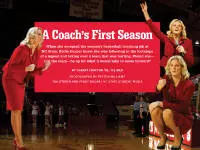
A Coach's First Season: Feature Story Part two
4/8/2010 12:00:00 AM | Women's Basketball
The Red & White for Life blog is the official blog of the NC State Alumni Association.
When she accepted the women’s basketball coaching job at NC State, Kellie Harper knew she was following in the footsteps of a legend and taking over a team that was hurting. Would she—and the team—be up for what it would take to move forward?
by cherry crayton ’01, ’03 med
Part Two of Three
The team’s bus pulls into the parking lot at the Ted Constant Convocation Center in Norfolk, Va., for the first road game of the season on Nov. 23. Harper heads to the back, where the players sit, and tells them softly that Old Dominion University staff called and asked if it was OK if the Lady Monarchs wore pink jerseys in memory of Kay Yow. Harper says she told them it was fine. “So they’ll be wearing pink uniforms,” Harper says. “Just wanted you to know.” She goes back to the front of the bus and sits as the players file out.
“It was emotional,” junior forward Tia Bell says after the game, which the Pack won 62–52. “I still have pictures of Coach Yow in my room. And when I see pink anything, it makes me think of her.”
Marissa Kastanek wasn’t sure if she should still come to NC State after Yow’s death and the departure of the coaches who had recruited her. Raleigh was a long way from her hometown of Lincoln, Neb. She wondered if she’d still be comfortable so far away under a new coaching staff.
Harper had thought about how she would want to be treated by a new coach. The first several months after she took the job were a whirlwind. She spent time recruiting—traveling, writing letters, making phone calls, sending e-mails—and making the rounds for speaking engagements and media interviews. She sat in dozens of meetings to learn ACC and NC State policies. She spent time house hunting. But her top priority? The players.
Every chance she got she spent time with them, popping up at team functions and conditioning workouts. She’d have them over to her house for dinner and invite them to go horseback riding. She established an ongoing open-door policy, encouraging them to stop by anytime to chat. And the first phone calls she made after her first meeting with the players and the public announcement of her hire were to the players’ parents and to Kastanek.
She called Kastanek nearly every day thereafter and flew to Nebraska twice to meet with her. She assured Kastanek that she wanted her to come to NC State and that she would take care of her. Kastanek made one request: Keep the Walk of Honor and the timeline of Yow’s career that’s sketched on a hallway inside Reynolds Coliseum.
There were changes coming. New team policies such as a midnight curfew on weeknights, no more visible tattoos, no cussing. There were new defensive sets that incorporated more full-court pressure, new in-bounds plays, new strength and conditioning workouts, and an up-tempo and motion-oriented offense. With that came a new style to practices, new drills and new emphases. One example: Blocked shots no longer make the highlight reel. Instead, the coaches instruct the players to keep their feet on the ground and to get charges to force a turnover. “How many times do you really end up with the ball when you block a shot?” the coaches tell them. “We need every extra possession we can get.”
And, of course, there was an entirely new coaching staff, including Harper’s husband Jon. But when the players visit the coaches in their offices today, they pass the timeline of Yow’s career and the Walk of Fame. And when they head down to the locker room, they walk on red-painted steps with white-lettered phrases laying out the “Wolfpack women steps to success,” including loyalty, poise, industriousness and enthusiasm. “Coach Harper is not trying to tear anything down; she’s not trying to stop any tradition,” redshirt junior guard Amber White says. “She’s just coming in here to put her own footprint on the game.”
During the bus ride to South Carolina for their Jan. 31 game against Clemson University, Harper tells the players she has a video clip she wants them to see. They have lost four of their last five games, dropping their record to 12–9. The first part of the season, the team often started games slowly. Sometimes they wereable to overcome early deficits to pull out a win and sometimes they weren’t. Now, in the second half of the season, they often play well early and build a lead, but when the opponent makes a run late, they fall apart. The players need mental toughness, Harper says.
So up on the small TV screens pops a vintage commercial for Weeble Wobbles, a popular toy
in the 1970s and 1980s. She directs the players to soak in the tagline: “Weebles wobble but they don’t fall down.” Then, she passes a bag filled with the toys around and asks each player to pick out one.
“You’ve been playing so good in the first half,” she tells them, “but whenever the other team makes a run in the second half, we fall. But the Weeble Wobble, if it falls over, it gets right back up. That’s what we need to do. When we fall down, we need to get right back up.”
Every once in a while, assistant coach Stephanie McCormick says, one of the coaches will look at the others and ask: “You remember [the 2005–06 season]?”
In her first season at Western Carolina, Harper coached the Catamounts to their first Southern Conference tournament title and a berth in the NCAA Tournament. The coaching staff also had signed what they thought was Western’s best class ever. Then those recruits arrived and the 2005–06 season began. They lost their first nine games, did not win a single nonconference game and finished 9–20. Going back to Pee Wee league, it was the only losing season that Harper has had as a player or coach. “It was the hardest year of my life,” she says.
Even more than loving to win, Harper once said, “I hate to lose.” She can’t eat after a loss. Her emotions range from “hurt to anger to hurt to anger.” She questions everything. And no matter how well they might have played or how close they came, no loss is ever OK. “There’s no such thing as a moral victory, and almost is not good enough,” she says. “Every time I step onto the court, I expect to be the best.”
People often assume she developed that mindset when she was at Tennessee, she says. “But I’ve always been like that.” One early memory: She was in elementary school, and her T-ball team was playing in the championship game. They lost. To the Green Rockets. She bawled her eyes out. Then, “I was furious,” she says. “I’m still mad about that loss.”
So imagine how she felt losing 20 games during the 2005–06 season. “She didn’t know how to handle it,” McCormick says. “We were in a downward spiral of a ride we couldn’t get off of.
“It was a misery of a year,” she adds, “but it was a necessary year.”
They did with that season what they tell the NC State players to do after each loss: Don’t dwell on the past, learn from it. That 2005–06 season taught them the importance of team chemistry and bringing in kids you can build a program around. Players who love the game, who are gym rats, who want to be coaches, and who spend their free time playing pick-up ball, Harper says. They have a toughness, a competitiveness, a grit about them. They’re versatile. They can dribble with their right hand and left hand, and they know how to score. Above all, they have good character. “There are no shortcuts to building a program the right way,” Harper says. “I expect to be good doing it the right way.”
And if you stick with your philosophy—and if you learn from each loss—good things will happen, she says. Take what happened with the Catamounts. The year after that 20-loss season, they lost just 10 games and won 24—the most in school history—and they shared their first-ever Southern Conference regular season championship. It was the best turnaround among NCAA teams that season.
Look for the third and final part of this story Friday at GoPack.com
When she accepted the women’s basketball coaching job at NC State, Kellie Harper knew she was following in the footsteps of a legend and taking over a team that was hurting. Would she—and the team—be up for what it would take to move forward?
by cherry crayton ’01, ’03 med
Part Two of Three
The team’s bus pulls into the parking lot at the Ted Constant Convocation Center in Norfolk, Va., for the first road game of the season on Nov. 23. Harper heads to the back, where the players sit, and tells them softly that Old Dominion University staff called and asked if it was OK if the Lady Monarchs wore pink jerseys in memory of Kay Yow. Harper says she told them it was fine. “So they’ll be wearing pink uniforms,” Harper says. “Just wanted you to know.” She goes back to the front of the bus and sits as the players file out.
“It was emotional,” junior forward Tia Bell says after the game, which the Pack won 62–52. “I still have pictures of Coach Yow in my room. And when I see pink anything, it makes me think of her.”
Marissa Kastanek wasn’t sure if she should still come to NC State after Yow’s death and the departure of the coaches who had recruited her. Raleigh was a long way from her hometown of Lincoln, Neb. She wondered if she’d still be comfortable so far away under a new coaching staff.
Harper had thought about how she would want to be treated by a new coach. The first several months after she took the job were a whirlwind. She spent time recruiting—traveling, writing letters, making phone calls, sending e-mails—and making the rounds for speaking engagements and media interviews. She sat in dozens of meetings to learn ACC and NC State policies. She spent time house hunting. But her top priority? The players.
Every chance she got she spent time with them, popping up at team functions and conditioning workouts. She’d have them over to her house for dinner and invite them to go horseback riding. She established an ongoing open-door policy, encouraging them to stop by anytime to chat. And the first phone calls she made after her first meeting with the players and the public announcement of her hire were to the players’ parents and to Kastanek.
She called Kastanek nearly every day thereafter and flew to Nebraska twice to meet with her. She assured Kastanek that she wanted her to come to NC State and that she would take care of her. Kastanek made one request: Keep the Walk of Honor and the timeline of Yow’s career that’s sketched on a hallway inside Reynolds Coliseum.
There were changes coming. New team policies such as a midnight curfew on weeknights, no more visible tattoos, no cussing. There were new defensive sets that incorporated more full-court pressure, new in-bounds plays, new strength and conditioning workouts, and an up-tempo and motion-oriented offense. With that came a new style to practices, new drills and new emphases. One example: Blocked shots no longer make the highlight reel. Instead, the coaches instruct the players to keep their feet on the ground and to get charges to force a turnover. “How many times do you really end up with the ball when you block a shot?” the coaches tell them. “We need every extra possession we can get.”
And, of course, there was an entirely new coaching staff, including Harper’s husband Jon. But when the players visit the coaches in their offices today, they pass the timeline of Yow’s career and the Walk of Fame. And when they head down to the locker room, they walk on red-painted steps with white-lettered phrases laying out the “Wolfpack women steps to success,” including loyalty, poise, industriousness and enthusiasm. “Coach Harper is not trying to tear anything down; she’s not trying to stop any tradition,” redshirt junior guard Amber White says. “She’s just coming in here to put her own footprint on the game.”
During the bus ride to South Carolina for their Jan. 31 game against Clemson University, Harper tells the players she has a video clip she wants them to see. They have lost four of their last five games, dropping their record to 12–9. The first part of the season, the team often started games slowly. Sometimes they wereable to overcome early deficits to pull out a win and sometimes they weren’t. Now, in the second half of the season, they often play well early and build a lead, but when the opponent makes a run late, they fall apart. The players need mental toughness, Harper says.
So up on the small TV screens pops a vintage commercial for Weeble Wobbles, a popular toy
in the 1970s and 1980s. She directs the players to soak in the tagline: “Weebles wobble but they don’t fall down.” Then, she passes a bag filled with the toys around and asks each player to pick out one.
“You’ve been playing so good in the first half,” she tells them, “but whenever the other team makes a run in the second half, we fall. But the Weeble Wobble, if it falls over, it gets right back up. That’s what we need to do. When we fall down, we need to get right back up.”
Every once in a while, assistant coach Stephanie McCormick says, one of the coaches will look at the others and ask: “You remember [the 2005–06 season]?”
In her first season at Western Carolina, Harper coached the Catamounts to their first Southern Conference tournament title and a berth in the NCAA Tournament. The coaching staff also had signed what they thought was Western’s best class ever. Then those recruits arrived and the 2005–06 season began. They lost their first nine games, did not win a single nonconference game and finished 9–20. Going back to Pee Wee league, it was the only losing season that Harper has had as a player or coach. “It was the hardest year of my life,” she says.
Even more than loving to win, Harper once said, “I hate to lose.” She can’t eat after a loss. Her emotions range from “hurt to anger to hurt to anger.” She questions everything. And no matter how well they might have played or how close they came, no loss is ever OK. “There’s no such thing as a moral victory, and almost is not good enough,” she says. “Every time I step onto the court, I expect to be the best.”
People often assume she developed that mindset when she was at Tennessee, she says. “But I’ve always been like that.” One early memory: She was in elementary school, and her T-ball team was playing in the championship game. They lost. To the Green Rockets. She bawled her eyes out. Then, “I was furious,” she says. “I’m still mad about that loss.”
So imagine how she felt losing 20 games during the 2005–06 season. “She didn’t know how to handle it,” McCormick says. “We were in a downward spiral of a ride we couldn’t get off of.
“It was a misery of a year,” she adds, “but it was a necessary year.”
They did with that season what they tell the NC State players to do after each loss: Don’t dwell on the past, learn from it. That 2005–06 season taught them the importance of team chemistry and bringing in kids you can build a program around. Players who love the game, who are gym rats, who want to be coaches, and who spend their free time playing pick-up ball, Harper says. They have a toughness, a competitiveness, a grit about them. They’re versatile. They can dribble with their right hand and left hand, and they know how to score. Above all, they have good character. “There are no shortcuts to building a program the right way,” Harper says. “I expect to be good doing it the right way.”
And if you stick with your philosophy—and if you learn from each loss—good things will happen, she says. Take what happened with the Catamounts. The year after that 20-loss season, they lost just 10 games and won 24—the most in school history—and they shared their first-ever Southern Conference regular season championship. It was the best turnaround among NCAA teams that season.
Look for the third and final part of this story Friday at GoPack.com

Light It Red: All-Access with NC State Women’s Basketball Trailer
Wednesday, April 22
LIGHT IT RED: All Access with NC State Women's Basketball - Episode 3
Wednesday, April 22
Her Story: Debbie Antonelli Enters the NC State Women's Basketball Ring of Honor
Wednesday, April 22
Leaving Your Tracks with Coach Nikki West
Wednesday, April 22