North Carolina State University Athletics
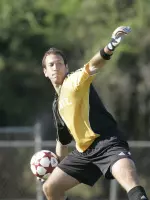
TIM PEELER: International Athletes Give Wolfpack Global View
11/16/2005 12:00:00 AM | Pack Athletics
Nov. 16, 2005
Reprinted with permission from Global Eyes, the NCSU Office of International Affairs newsletter. An on-line version of the newsletter is available here.
By Tim Peeler
RALEIGH -- Growing up in Guatemala City, Guatemala, Jorge Gonzalez always wanted to come to the United States for college. He even spent a few months as an exchange student in Minnesota when he was a freshman in high school, because he thought it would improve his English skills, the No. 1 barrier international students have in coming to an American university.
When Nandita Chandrasekar was playing tennis in Madras, India, she never really gave playing in the U.S. a second thought. Three months before she came to the United States to attend Charleston Southern University, she had never dreamed of going to another country to study. Once she got here, she transferred from Charleston Southern to NC State when Hans Olsen became the head coach of the Wolfpack.
 Women's tennis player Nandita Chandrasekar  |
|
There are about two dozen international athletes who compete for NC State's athletic programs. While some teams have no foreign players at all, others have a high concentration of players from other countries. Five of the nine players on the women's tennis team hail from outside the U.S., part of Olsen's philosophy to have a diverse lineup.
"None of my teams have ever been such that all the people are from the same place," Olsen said. "I feel that has been a great part of the education for the international players as we as the American players on our team. They have learned to work well with different backgrounds, to try to understand each other better, with their cultures, their leadership styles, communication styles."
The men's golf team has four international players, including three from South Africa, which just so happens to be the home country of one of the school's most successful professional athletes in decades, PGA Tour player Tim Clark.
Men's soccer, which is led by the school's only head coach born outside the U.S., Argentina native George Tarantini, has always relied on a strong international presence on its roster.
There are obviously challenges for international athletes that American kids don't have to deal with, athletically, academically and socially. But, there are also many opportunities.
"Imagine you live in Turkey, with a complete full life in Turkey," said basketball player Engin Atsur, a native of Istanbul. "Then someone comes in and offers you the chance to live four years in America, go to school, play basketball, all the things you ever wanted to do. It's a whole different world.
"You can't pay and get that kind of an experience."
It takes determination, of course. But the rewards can be great. Gonzalez will graduate in December with a degree in industrial engineering, with a minor in economics, something he has dreamed of at least as long as being a star soccer player.
"Overall, the academic performance of our international athletes is exceptional," said Phil Moses, the director of the NC State Academic Support Program. "They tend to be go-getters. They are committed. They are very dedicated to their studies."
But the transition to life at an American university can be difficult. Gonzalez was lonely in his first few weeks here, and he couldn't find any place in Raleigh that served his favorite meal, plantains and beans. Chandrasekar grew up speaking English in India. But it was British English, a far cry from the Southern American variety that greeted her.
Apparently, there's no Indian - or British - word for "y'all."
The key for all international student-athletes is to find a comfortable atmosphere. Usually, that means being with teammates, who have similar class schedules, study habits and social lives.
"First of all, if I didn't have my tennis family, I would be really homesick," Chandrasekar said. "The tennis girls, we all have the same goals. And our lifestyle is very different than regular students. We know what we go through. We do the same things. We kind of understand each other better, even though we didn't know each other very well. We had a good feel for each other and know what each other are thinking."
At the same time, there's nothing like a taste of home. Gonzalez found about 15 other Guatemalans on campus when he arrived here, some of whom were friends of friends back home. It was a ready-made social group. "For a while, all my best friends were foreigners," said basketball player Ilian Evtimov, who came to the U.S. when he was 15 and attended three different high schools. "They were regular students from Africa, Greece, Mexico. Everyone was foreign.
"It made it that much easier for us when we went out together, because sometimes we didn't understand what was going on around us. There was usually someone among our group who understood."
International athletes also enrich the college experience of American students. Lauren Barry, a junior on the women's tennis team, had never really been exposed to students from other countries while growing up in Raleigh. But when she arrived on campus, she and twin sister Allison were matched with Uruguay-native Agustina Arechavaleta to share an apartment. Lauren Barry learned that despite their different backgrounds - a completely different way of playing youth tennis, the hardship of just getting to tournaments, all the difficulties just getting into school - that basically she and her foreign teammates enjoyed the same things.
"I have learned a lot, playing with them, getting to know them," Barry said. "I have learned about what it is like in their countries to play tennis and how they are able to come here. Also, I just learned about their culture and what their day-to-day life is like.
"It's fun. We make team CDs and we put on them songs from all different countries. We also taught them some American slang, which was a lot of fun."
For the most part, international students found NC State to be an inviting atmosphere to study -- and to play.
"I don't know what it is like at other universities, but I know that NC State has such good infrastructure," Chandrasekar said. "It has a really good athletic support system. It has made a big difference for me."
You may contact Tim Peeler at tim_peeler@ncsu.edu.