North Carolina State University Athletics
PEELER: More Than A Century With VPI
9/29/2010 12:00:00 AM | Football
Sept. 29, 2010
BY TIM PEELER
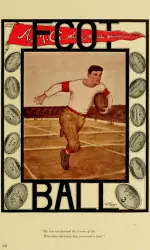
RALEIGH, N.C. - One hundred years ago, a Virginia-born football/baseball superstar led the North Carolina School for Agriculture and Mechanic Arts to a landmark victory over Virginia Polytechnic Institute.
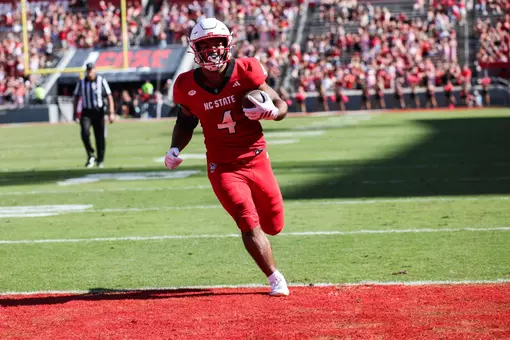
Can Richmond-born Russell Wilson repeat history a century later when the Hokies (2-2 overall, 1-0 ACC) visit Carter-Finley Stadium Saturday in a nationally televised contest against the undefeated Wolfpack (4-0, 1-0)?
It should be another exciting installment in one of the South's earliest football rivalries. The two teams first met on Thursday, Oct. 25, 1900, during the North Carolina State Fair, a game won by VPI 18-2. The rivalry was borne because the University of North Carolina chose to focus on its annual season-ending game against Virginia, instead of A&M, its smaller sister institution to the east.
So, NC State and Virginia Tech, two land-grant institutions with similar charters and curricula, began a rivalry that was played 39 times between 1900-64, usually at neutral sites in Virginia on Thanksgiving Day.
 In late November 1910, the A&M Farmers boarded a train for Norfolk, Va., to play one of the most important games in school history. Coach Edward L. Green's team had not lost a game all season, tying its first two games and winning three in a row over Eastern College of Manassas, Va., Richmond College and Wake Forest College by a combined score of 100-3.
VPI was as strong back then as the two teams the Farmers tied earlier in the season, Georgetown and Villanova. The year before, the Hokies handed A&M its only loss of 1909, a season-ending 18-5 setback that spoiled a 6-0 start.
But 1910 was a special season in NC State athletics history, a year that was remembered by the editors of the Technician in 1939 as the greatest sports season in the school's first 50 years. In the spring, the baseball team compiled an 18-1-1 record, behind the one-two punch of pitchers Tal Stafford and Dave Robertson and the play of shortstop Harry Hartsell. It easily staked a claim to the South Atlantic baseball championship. The track team won its first ever state championship meet.
Things were going so well that the students at the school - with a little help from the students at the campus Young Men's Christian Association - were eager to add more sports to the athletics department, basketball and tennis. So while the football team was training to play Virginia Tech on the gridiron, a collection of players began training on the outdoor drill fields across from Holladay Hall to face VPI in basketball as well.
The basketball game - the first intercollegiate hoops contest in NC State history - was scheduled to be played the night before the Thanksgiving Day football contest. Sadly, a week's worth of rain prevented the basketball team from preparing and the game had to be cancelled. The second scheduled game, this time against the University of North Carolina in Chapel Hill, was also cancelled because of a disagreement between the two schools about eligibility. NC State eventually played its first basketball game on Feb. 15, 1911, against Wake Forest.
But the football game against VPI went off without a hitch. Nearly the entire student body paid $2 for roundtrip tickets on the Southern Railway's Seaboard Air Line train to join the football team in Norfolk for the game.
They wanted to see if Stafford, the football team's quarterback, and Robertson, the starting halfback, could match A&M's undefeated 1907 season, which was capped by a 10-4 Thanksgiving Day victory over the University of Virginia during the Jamestown Exposition.
Much had changed since that game. Green, a two-time All-America halfback and a member of a world-champion relay team while at the University of Pennsylvania, had taken over as A&M's head coach in 1909 after one season at UNC. Touchdowns were now worth five points. The offense had to go 10 yards instead of five to earn a first down. The flying wedge was outlawed.
 Green molded a team out of the athletes on campus, but relied heavily on Stafford, Robertson and fleet-footed end D.W. "Dutch" Seifert. Stafford, who later became the head football and baseball coach at the school, completed the first forward pass and made the first defensive interception in school history. Team captain Hartsell was expected to be a big contributor, but was injured early in the season and saw limited action the rest of the way.
Robertson, moved from fullback to halfback, became the workhorse of the offense. The 6-0, 180-pound native of Portsmouth, Va., was fast, big and athletic and was rarely stopped for less than 10 yards when he took off around the end.
In front of an overflow crowd of 8,500 spectators, Robertson carried the ball numerous times, easily rushing for more than 100 yards. But he walked a very fine line between hero and goat. In the first quarter, on fourth and 15, punter H.M. Cool threw the ball downfield to Stafford, who tossed it over to Robertson. But the normally sure-handed back fumbled it near the goal line. Fortunately for the Farmers, Robertson fell on the ball in the end zone for the game's only touchdown.
Virginia Tech scored its only points on a drop-kick in the second quarter by W.R. Legge from the NC State 12-yard line.
Neither of the two teams managed to threaten the rest of the way, and the Farmers won 5-3, ending the season with a 4-0-2 record and claiming another South Atlantic title.
"Students, Carolinians and Virginians will remember it as the cleanest, most exciting, hardest fought game ever played in the South," reported the Red & White, NC State's student newspaper of the day.
Afterwards, A&M president W.C. Riddick claimed - with somewhat convoluted comparative logic - that his school could claim the college football national championship, along with Harvard.
"Harvard was this year tied by Yale, who in turn defeated Princeton," the Riddick told the student body at a postseason banquet. "Previous to this, Yale was beaten by West Point, over which team the Naval Academy was victorious in their annual contest for the first honors of the country, and they have been rated very high by the foremost football critics; but they were unable to score a touchdown against the Virginia Polytechnic Institute and only edged a victory over them by the narrow margin of one field goal.
"So A&M, by its defeat of Virginia Polytechnic, reaches a class of Navy, and, therefore, the class of the best. Again, Villanova lost to the University of Pennsylvania by only a small score, and Penn tied Michigan, the strongest team in the West, and defeated Cornell. A&M played Villanova to a 6-6 game in which the playing was largely in favor of A&M, and which A&M would have won handily but for an injury to their quarterback, that greatly lessened the team's efficiency, especially on offense."
Indeed, the Farmers of that season can be remembered as one of the nation's best teams, with a potent offense and a defense that allowed only one touchdown in its six games.
Hartsell, Seifert and Stafford all became important figures in NC State athletics history. Hartsell became his alma mater's football coach and first athletics director in 1917. Stafford, who lost only one game in four years as baseball pitcher, took over as football coach when Hartsell was drafted into the Army for World War I and held down the fort until Hartsell's return. Stafford eventually became the editor of the school's alumni magazine and the executive secretary of the Alumni Association. Seifert was active in both the Alumni Association and the Wolfpack Club throughout his life.
Green, despite being the most successful coach in school's first half-century of football, quickly fell from graces, even though he compiled a 25-8-2 record in five years. His players complained that he often used foul language during practice and in games, an offense that Riddick could not abide. The school dismissed Green prior to the 1913 season. However, because he signed a contract, he was allowed to stay on as a lame duck through the end of the season, even though Jack Hegarty was already on board as his replacement.
Robertson became the most successful of all, becoming NC State's first professional athlete. The following spring, he struck out a college baseball record 23 batters against Guilford College, outdueling fellow future major leaguer Ernie Shore in a 5-2 victory. New York Giants manager John McGraw heard about that game and offered Robertson a major league contract, if he agreed to give up college football.
Robertson talked McGraw into allowing him to play three football games in 1911, and McGraw relented. In the second of those games, against Bucknell, Robertson broke both his shoulders on a running play, injuries that ruined his pitching career.
The Giants kept their commitment to him, and he became an excellent third baseman and outfielder whom sportswriters of the day referred to as the "National League Ty Cobb." He twice tied for the NL's home run title with 12 during baseball's dead-ball era. His 11-for-22 performance at the plate during the 1917 World Series was a record that lasted for 37 years, until it was broken by Billy Martin of the New York Yankees.
It's the kind of career path Wilson, who aspires to play in both the NFL and the Major Leagues, would love to follow, starting this weekend against old-time rival Virginia Tech.
You may contact Tim Peeler at tim_peeler@ncsu.edu.