North Carolina State University Athletics
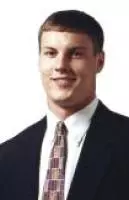
TIM PEELER: First Classes Usually Dig Up Some Gems
2/6/2007 12:00:00 AM | Football
BY TIM PEELER
RALEIGH –
What will that first class mean to O’Brien and the Wolfpack? It’s always hard to say what recruits will do, though many scouting and recruiting services proport to know already how good high school players will be in college. But it’s always fun to look back and see what previous classes have done, and since 1954, when Earle Edwards was hired from his position as an assistant coach at Michigan State, first signing classes have been pretty successful for Wolfpack football.
Edwards’ first class included halfbacks Dick Christy and Dick Hunter, tackle Dick “Amedeo” DeAngelis and center Jim Oddo, all of whom were senior leaders on NC State’s first ACC Championship team in 1957. Christy, famous for his superstar effort against
South Carolina that secured the conference crown, was the ACC Football Player and the ACC Athlete of the Year in 1957.
Among the players signed by Lou Holtz in his first class were twins Dave and Don Buckey, tight end Pat Hovance and defensive tackle Tom Higgins, all of whom were first-team All-ACC selections by their senior season. Don Buckey was named first-team All-America by the Football Writers Association of America in 1975.
In 1976, Bo Rein had a pretty good first recruiting class as well, including center Jim Ritcher, defensive back Woodrow Wilson, running back Billy Ray Vickers, defensive tackles Simon Gupton and Bubba Green, tight end Joe Hannah and quarterback Scott Smith. (Not to mention current senior associate athletics director David Horning.) Ritcher was a consensus first-team All-America in 1978 and ’79 and the 1979 Outland Trophy Winner as the nation’s top lineman.
In 1980, Monte Kiffin brought in one of the most talented linebackers in NC State football history, Vaughan Johnson of Morehead City. He was the Wolfpack’s leading tackler his final two years, and went on to become an All-Pro linebacker for the New Orleans Saints.
In 1983, Tom Reed signed
Greensboro wide receiver Haywood Jeffires, who became a star wide receiver for the Wolfpack and for the NFL’s Houston Oilers.
When Dick Sheridan was hired in 1986, one of his first recruits was
Winston-Salem defensive tackle Ray Agnew, who made an immediate impact and was named the 1986 ACC Rookie of the Year. Quarterback Preston Poag, running back Todd Varn and offensive lineman Charlie Cobb all made big impacts before their careers ended.
Mike O’Cain’s first year as head coach was in 1993, but he was named to the position in the summer, well after Signing Day. So his first recruiting class was in 1994, and it included running back Tremayne Stephens, who went on to have an All-ACC career for the Wolfpack. Ian Rafferty, Mark Thomas and Morocco Brown all went to have productive careers as well.
But none of those former Wolfpack standouts turned into a bigger star than the towering young quarterback from
Florida
State win the 1999 BCS Championship and there was little time remaining on the recruiting calendar.
But O’Cain had identified a kid named Philip Rivers, the son of an
Alabama high school coach, as a top quarterback target the year before when Rivers attended O’Cain’s football camp. Rivers committed to the Wolfpack before the 1999 season was over.
After O’Cain was let go, Wolfpack assistant Joe Pate remained at the school and continued to recruit Rivers as several bigger schools from the Southeastern Conference came calling.
“The primary competition for Philip was
Georgia,” says Pate, who is now the Assistant Athletics Director for Football Operations. “They recruited Philip really hard until they signed an in-state quarterback, David Green, who was also a coach’s son. He started for them for four years. David Cutcliffe was the head coach at Ole Miss … and he recruited Philip really hard. That would have been really interesting because he and Eli Manning would have been freshmen together that year.
“
Auburn, despite what they say now, recruited Philip as a quarterback. That might have been with the thought that if things didn’t work out, he could play something else [like tight end].
Alabama did not recruit him because Brody Croyle was a junior, and they told him and his dad that year that they wouldn’t take a quarterback and they didn’t.”
But Pate’s diligence with Rivers, and Amato’s trip to
Athens the day after he was hired in January, 2000, paid off. Rivers joined the Wolfpack just a few days later as a spring semester enrollee. He started all 51 games of his career and was the 2003 ACC Player of the Year. He finished his career as the second-leading passer in college football history with 13,582 passing yards.
The Wolfpack got a little something extra in that class as well: Pate recruited Birmingham-native Jerricho Cotchery to come with Rivers to
Can anyone in O’Brien’s class top the accomplishments of other signees by first-year coaches? Impossible to say. But Pate thinks that O’Brien and his staff had a much better head start than most.
“The transition has been much smoother, that’s for sure,” Pate says. “This staff already had players that they had recruited and it is just a different situation. They are going to do a great, great job. I am thoroughly convinced of that.”
You may contact Tim Peeler at tim_peeler@ncsu.edu.