North Carolina State University Athletics
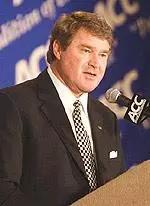
Bigger League Means Bigger Money for Expanding ACC
5/12/2004 12:00:00 AM | Football
May 12, 2004
By EDDIE PELLS
AP Sports Writer
AMELIA ISLAND, Fla. (AP) - The Atlantic Coast Conference got new teams, and now, it's getting more money.
The expanding conference announced a new, seven-year television deal for football with ABC and ESPN, beginning in the fall. While none of the parties would discuss specifics of the deal, ACC commissioner John Swofford acknowledged Wednesday that it would nearly double the average of about $21 million a year under the old contract.
"This was a very important negotiation for our league and its future," Swofford said at the close of the league's annual meetings. "We feel very good about both the exposure aspects of it, as well as the financial aspects of it."
The increased TV money was the centerpiece of the plan put together by Swofford when he recruited Big East schools - most notably Miami - in contentious negotiations last year.
By the time the dealing was done, Miami and Virginia Tech agreed to join the ACC beginning next season. Boston College will join in 2005 to bring the ACC to 12 teams, the same number as the Southeastern Conference and the Big 12, which are also big players in the Bowl Championship Series.
The dozen teams will allow the ACC to divide into divisions for football and hold a conference championship game, beginning in 2005. That game is expected to produce about $6 million in extra revenue. A site for the game will be determined later this year, with Jacksonville, Orlando and Charlotte, N.C., considered the leading candidates.
ABC will televise the title game.
Among the highlights of the new deal will be prime-time ABC telecasts of the Miami-Florida State game on Labor Day 2004 and 2005, an increase from three to six Thursday night games on ESPN and ESPN2 and increased exposure on ESPN pay-per-view services, ESPN Classic and ESPN.com.
"John Swofford was a total visionary of this deal," ESPN executive vice president Mark Shapiro said. "He got from the beginning that we needed to reach the audience from the beginning on various platforms."
When the ACC began negotiating to bring new teams in, there was some debate as to whether the league would get a big enough increase in TV revenue to make the move worthwhile. This was one of the main sticking points for Miami, and after athletic director Paul Dee and president Donna Shalala investigated, they decided the move was worthwhile.
After taking part in his first ACC meetings, Dee's opinion remained the same, even though the new teams don't get a full share in the revenue-sharing plan until their third year in the conference.
"There's a formula, and a lot of different pieces that go to it," Dee said. "For the conference, the overall good of the conference, the conference did well."
The expansion was made almost solely for football reasons and many ACC purists - remembering the league's rich basketball tradition - were disgruntled.
The most contentious issues at this year's meetings dealt with basketball scheduling and the death of the ACC's longstanding double round-robin format. On the recommendation of coaches, the league will stick to a 16-game regular-season schedule for at least the next four seasons. One of the home-and-home series expected to go in the upcoming season will be Duke-North Carolina State; the teams have played two regular-season games every season since 1911-12.
Other home-and-home series will likely follow suit on a rotating basis, although the schedule won't be finalized until July.
The basketball teams won't divide into divisions, and ACC officials were also busy trying to come up with equitable tiebreakers, a difficult proposition considering some teams play each other twice, while others play only one time.
The expansion comes against the backdrop of the Bowl Championship Series' plans to add a fifth game beginning in the 2006 season. With Miami coming in, the ACC could benefit by increasing its chances of placing more than one team in the games. A first team will earn between $14 million and $17 million for a conference and a second team will be worth about $4.5 million.